
Need Fan Installation Near Me for Your Home
If you are adding a ceiling fan, upgrading an existing one, or installing an attic or exhaust fan in Wylie, TX, the wiring details matter. This guide explains what to check first, what can affect performance, and how to avoid common mistakes so your fan runs safely and the way you expect.
It starts with a simple decision: you want better airflow in your living room, a quieter fan in the bedroom, or a properly vented attic. Then you notice something does not add up. The switch is already there, but the fan light and fan speed do not behave correctly, or the fan wobbles after install.
In Wylie, TX homes, fans are often tied into older switch setups, existing wiring paths, or multi-switch layouts that were never designed for a specific fan’s controls. This guide helps you understand what to check first, what “good installation” actually depends on, and when it makes sense to bring in an electrician for ceiling fan installation and repair.
- Quick answer
- What to check first
- Main things customers should understand
- Why this matters in Wylie, TX
- Common mistakes to avoid
- Customer checklist
- Frequently asked questions
Quick Answer
For fan installation near you, the safest approach is to confirm the wiring and controls before the fan goes up. A ceiling fan needs the right power and grounding at the ceiling box, appropriate switch wiring for the fan’s functions, and correct support for the fan’s weight. If you have flickering lights, a fan that only works on one speed, or a switch that does not match the fan’s behavior, stop and get an electrician’s help. JME Electric Group can review your setup and handle ceiling fan installation and repair with electrical repairs and wiring done to match your home.
What to Check First
Before you schedule installation, take a few minutes to look at what you already have. The goal is to match the fan’s control needs to your current wiring, not to force the fan to work with a setup it was not intended for.
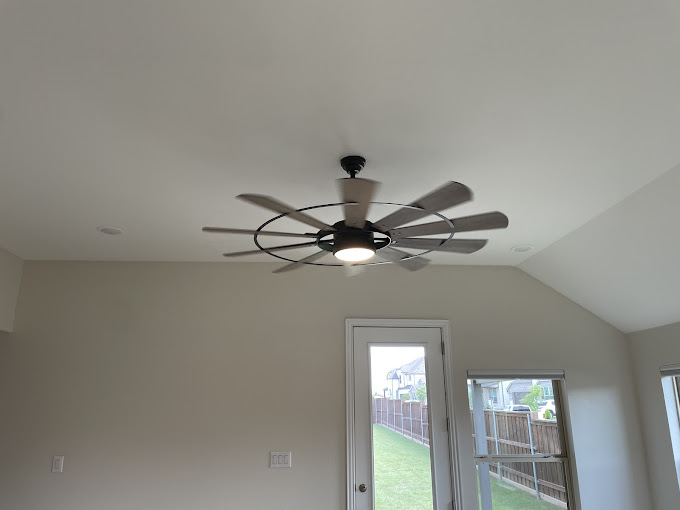
1) Identify the fan type
Ceiling fan with separate light? Fan speed control? Remote control? Attic fan or exhaust fan? The wiring and switch plan can change depending on the type.
2) Confirm switch behavior
Does one switch run both the fan and the light? Do you have two switches? If you have a dimmer or older control, it may not be compatible.
3) Look at the ceiling box
Fan mounting needs solid support. If the box is loose, old, or not rated for fan loads, wiring alone will not solve the problem.
If you are unsure about your wiring layout, the fastest path is an electrical inspection focused on the circuit, connections, and switch wiring. That prevents “trial and error” that can lead to repeated switch changes, damaged components, or a fan that never runs correctly.
Main Things Customers Should Understand
Fan problems usually trace back to a few root causes. Understanding them helps you ask better questions and spot when the installation needs electrical troubleshooting or electrical repairs.
Professional observation: A fan is not just a motor and blades. The electrical side includes correct wiring, proper grounding, and the right control method for the fan and light. If those do not line up, you can end up with flicker, speed issues, or intermittent operation.
| Situation you notice | What it often means | What to do next |
|---|---|---|
| Fan light flickers | Control mismatch, connection issue, or incompatible dimmer/switch setup | Have the circuit and switch wiring checked before replacing parts |
| Fan only runs on one speed | Speed control wiring or control device compatibility issue | Confirm the fan’s control requirements against your current wiring |
| Fan wobbles after install | Mounting support or ceiling box alignment problem | Verify mounting and support requirements, then address electrical connections |
| Breaker trips when fan starts | Overload, wiring issue, or wrong circuit configuration | Stop using the fan and request electrical troubleshooting |
On many Wylie, TX properties, fans get added during remodels. That can mean new fixtures connected into existing circuits, or shared wiring that was originally intended for lighting only. If you see signs of older electrical service upgrades being needed, it is worth reviewing the bigger picture, including the electrical panel and available capacity. For related work, you can also explore electrical panel upgrades and repairs.
Another factor is wiring quality at the ceiling and switch locations. Poor connections, loose conductors, or mismatched wiring styles can create heat at terminations and lead to failures later. If you are planning multiple electrical changes, it helps to coordinate the wiring plan so everything is consistent from the panel to the fixture.
Why This Matters in Wylie, TX
In Wylie, TX, many homes rely on fans to stay comfortable during hotter months, and attic or exhaust fans help manage heat and humidity in the home’s upper spaces. When fan wiring is set up incorrectly, comfort suffers and electrical issues can show up as flicker, inconsistent operation, or repeated switch problems.
From what we see during fan-related troubleshooting, customers often focus on the fan unit itself and do not realize that ceiling fan installation depends on what is already behind the wall and at the ceiling box. If your switch layout was originally designed for a single light, adding a fan with separate controls may require electrical code corrections and proper circuit connections so the fan and light behave as intended.
If you are also updating other parts of your electrical system, you may want to review electrical wiring planning so the fan install does not become a patchwork solution.
Common Mistakes to Avoid
Most fan installation issues come from avoidable decisions. Here are the ones we see most often when homeowners try to handle the setup without electrical help.
Common mistake: Installing a fan while keeping a dimmer or control device that is not compatible with the fan’s electronics. This can cause flicker and shortened component life.
Common mistake: Assuming the existing ceiling box is rated for a fan. Even if the wiring is correct, an undersupported box can lead to wobble and stress on connections over time.
Common mistake: Wiring the fan to “make the switch work” instead of matching the fan’s control instructions. When the wiring plan is wrong, you can end up with a fan that only partially functions or trips a circuit.
If you are running new circuits or improving an electrical setup, it can also be a good time to consider whole home surge protection and related electrical service upgrades. For example, home rewiring and surge protection may be relevant if you are already addressing wiring safety and protection across the home.
Customer Checklist
Use this checklist to prepare for your fan installation in Wylie, TX. It helps you communicate clearly and ensures the electrician can verify the key electrical details quickly.
- Confirm whether you are installing a ceiling fan, attic fan, or exhaust fan
- Note how many switches you have and what each switch currently controls
- Write down whether the fan includes a light kit and whether it should be controlled separately
- Check the ceiling box condition (secure, stable, and suitable for fan mounting)
- Identify any existing speed control or dimmer on the circuit
- Be ready to describe any symptoms if the fan is replacing an existing one (flicker, tripping, wobble, or partial function)
- Ask about electrical troubleshooting if the breaker trips or controls do not match the fan’s functions
Representative scenario: “Two switches, but only one works”
A homeowner in Wylie, TX replaced a basic ceiling fixture with a ceiling fan that includes a light kit. They had two wall switches originally: one for the light and one for the fan. After install, the fan and light both responded to the wrong switch, and the fan speed control did not behave correctly. The issue was not the fan itself. The circuit wiring and switch configuration needed to be verified and corrected so each function matched the intended controls.
In cases like this, the fix typically involves electrical troubleshooting at the switch and ceiling locations, confirming the correct power and control conductors, and ensuring the fan wiring and grounding are handled properly. JME Electric Group can support both fan installation and repair and the underlying wiring work when adjustments are required.
Get your fan’s wiring and controls checked the right way
If your switches do not match the fan’s functions, you are seeing flicker, or you want a clean installation from ceiling box to switch, call JME Electric Group. We serve Wylie, TX and nearby areas for fan installation and repair and related electrical troubleshooting.
(971) 955-9758Frequently Asked Questions
Do I need an electrician for ceiling fan installation?
You do not always need help for every fan install, but an electrician is a smart choice when the wiring is unclear or the fan has multiple functions. If you have a light kit, separate fan control, or a remote and your switches do not currently match those controls, electrical troubleshooting can prevent flicker, speed control problems, and breaker issues. In Wylie, TX, many homes have older switch setups or remodel wiring that needs verification. JME Electric Group can confirm the circuit, connections, and ceiling box support so the installation is safe and functional.
Why does my fan light flicker or dim?
Flicker often points to an incompatible control setup or a wiring connection issue. Some fans and light kits do not work correctly with certain dimmers or older switching configurations. Loose or incorrect wiring at the ceiling or switch location can also cause inconsistent light behavior. If the flicker happens only when the fan runs, the control wiring is especially likely to be involved. The best next step is to have the circuit and switch wiring verified before replacing the fan or light components.
Can I reuse the existing wall switch for a new fan?
Sometimes, but it depends on how many functions your fan has and how your current switch is wired. A ceiling fan with a light kit may require separate switching for the fan and the light, or it may need a specific control method. If you currently have a single switch that controlled an old fixture, the fan’s instructions may require changes to the wiring plan. An electrician can inspect the switch wiring and confirm what conductors are present so the fan’s controls work as intended.
What if the breaker trips when the fan turns on?
A breaker trip is a sign that something is not configured correctly, not just a nuisance. It can happen due to overload, wiring problems, or an incorrect circuit setup. Do not repeatedly reset the breaker to test the fan. Instead, stop using the fan and request electrical troubleshooting. JME Electric Group can review the circuit configuration, wiring connections, and related electrical service upgrades if the home needs additional capacity or safer circuit arrangements for the new load.
Do you also install attic fans and exhaust fans?
Yes. Fan installation is not limited to ceiling fans. Attic fans and exhaust fans also rely on correct wiring and safe control setup. The right approach depends on where the fan is mounted, how it is controlled, and how the circuit is configured. If you are improving ventilation in your home in Wylie, TX, an electrician can help verify the wiring plan so the fan runs reliably and does not create electrical safety issues.
Ready for a fan that works the way you expect?
If you want dependable ceiling fan installation in Wylie, TX or need help fixing a fan that does not respond correctly, JME Electric Group can help you get it right. We also support related electrical work like outlet installation when your project requires additional power options.
Contact JME Electric Group
JME Electric Group
JME Electric Group is an electrician serving Wylie, TX and surrounding areas. We help homeowners and property owners with fan installation and repair, electrical wiring, outlet installation, lighting installation, electrical troubleshooting, and electrical repairs. If your fan project involves switch control issues or wiring concerns, our focus is on practical, safe electrical work that supports reliable day-to-day use.